
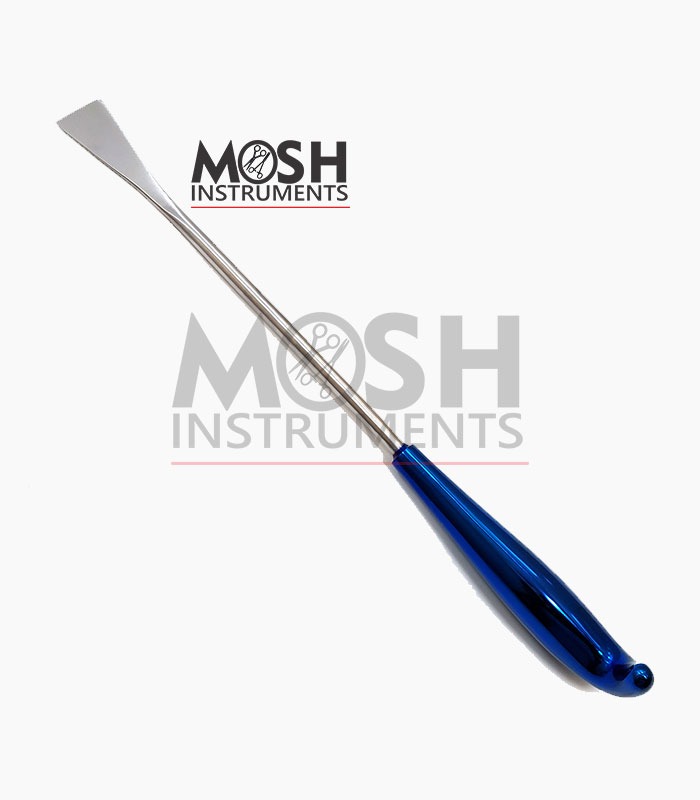
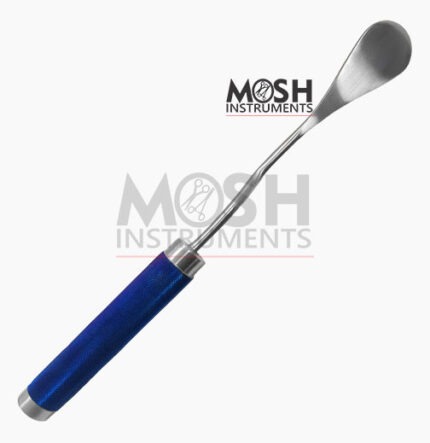
The Tebbetts breast dissector has a broad, paddle-shaped spatula for smooth implant pocket dissection. It spreads pressure across the tissue plane, so trauma stays low.
You can choose a 13″ (330mm) or a 17-1/2″ (445mm) model. Also, the long shafts reach the pocket through inframammary, periareolar and transaxillary incisions. Finally, a gold-plated handle makes it easy to spot on the tray.
Tebbetts breast dissector Features
- Paddle-shaped spatula: separates tissue planes smoothly.
- Two lengths: 13″ (330mm) with an 8-1/2″ shaft, or 17-1/2″ (445mm) with a 13″ shaft.
- Gold-plated handle: gives a firm grip and quick identification.
- Satin finish: cuts glare under theatre lights.
- German stainless steel: resists corrosion through many autoclave cycles.
Clinical Applications
- Breast augmentation
- Implant pocket preparation
- Breast reconstruction
- Breast revision surgery
- Cosmetic breast surgery
Technical Specifications
| Size options | 13″ (330mm) or 17-1/2″ (445mm) |
| Shaft length | 8-1/2″ (216mm) or 13″ (330mm) |
| Tip | Paddle-shaped spatula |
| Handle | Gold-plated |
| Material | German surgical stainless steel |
| Sterilization | Autoclavable, reusable |
Cleaning and Sterilization
Clean the instrument soon after each case. First, soak it in a pH-neutral enzymatic cleaner. Then brush it gently with a soft nylon brush. After that, rinse and dry it fully. Finally, autoclave it with your standard hospital steam cycle.
Quality, Warranty and OEM Supply
We make every instrument at our workshop in Sialkot, Pakistan. Before dispatch, our team checks each piece for finish, fit and function. We supply it non-sterile, so sterilize it before first use. In addition, a 3-month warranty covers material and manufacturing defects. We also offer OEM manufacturing, private labeling and wholesale supply. Browse our full range of breast dissectors and fiber optic retractors.
Tebbetts breast dissector FAQs
What is the Tebbetts breast dissector used for?
Surgeons use it to create the implant pocket in breast augmentation and reconstruction.
Why a paddle shape?
The wide paddle spreads pressure evenly. Therefore, it separates tissue with less trauma.
Which length should I choose?
Choose 13″ for periareolar or inframammary access. However, choose 17-1/2″ for transaxillary access.

Reviews
There are no reviews yet.