
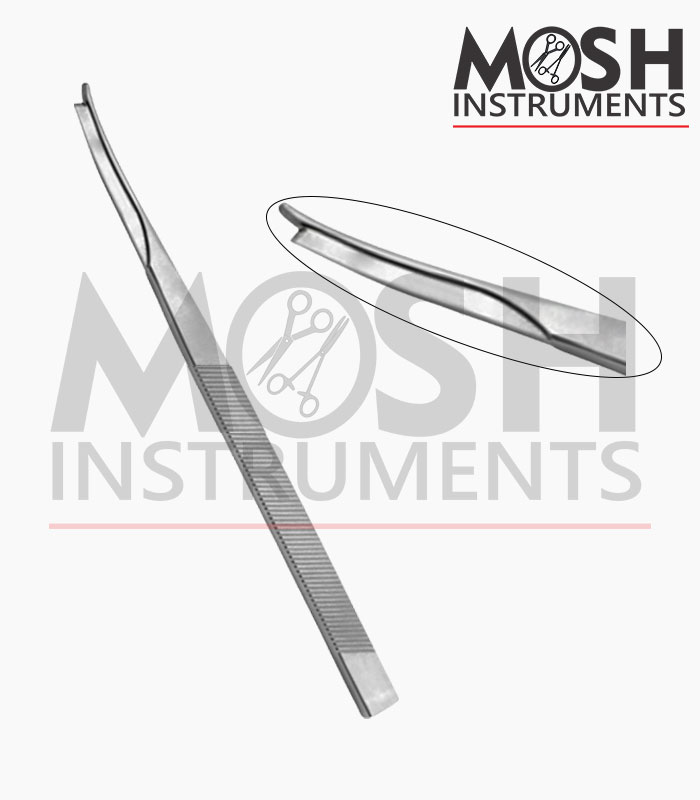
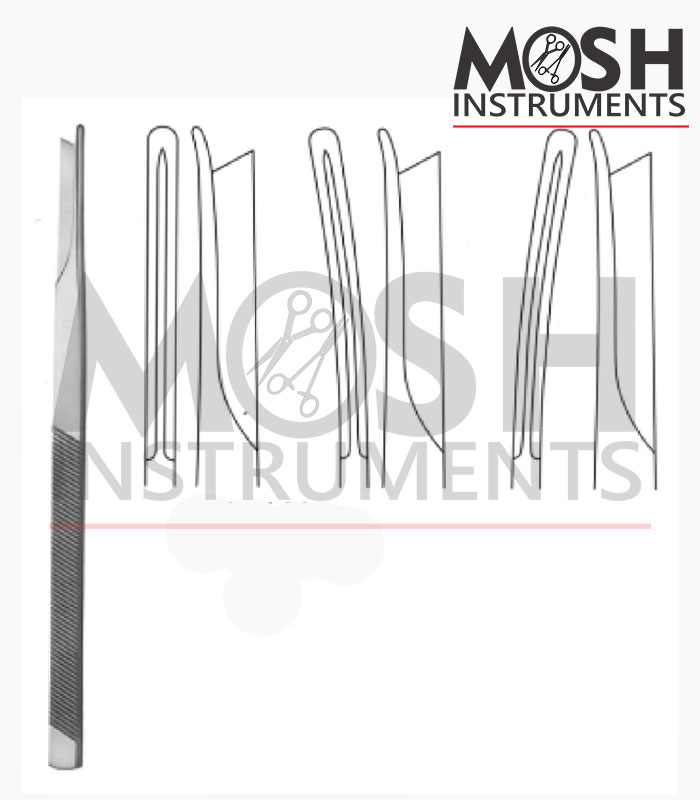
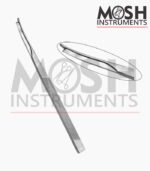
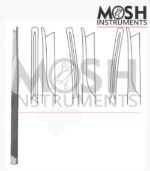
Our guarded lateral osteotome cuts the lateral nasal wall cleanly during rhinoplasty. A small guard on the blade tracks along the bone, so you can follow your cut line by feel.
You can choose a left, right or straight guard. Because the guard rides on the outside of the bone, it also protects the overlying skin. As a result, you get controlled osteotomies with less soft tissue trauma.
Guarded lateral osteotome Features
- Guarded blade: tracks the bone and protects soft tissue.
- Left, right or straight guard: to match the side and technique.
- Precision-ground edge: cuts bone cleanly.
- Balanced body: transfers mallet force evenly.
- German stainless steel: resists corrosion through many autoclave cycles.
Clinical Applications
- Lateral nasal osteotomy
- Rhinoplasty
- Septorhinoplasty
- Narrowing of the nasal bones
- Nasal reconstruction
Technical Specifications
| Guard | Left, right or straight |
| Blade | Guarded, precision-ground |
| Material | German surgical stainless steel |
| Finish | Satin |
| Sterilization | Autoclavable, reusable |
Cleaning and Sterilization
Clean the osteotome soon after each use. First, soak it in a pH-neutral enzymatic cleaner. Then brush away bone debris gently with a soft nylon brush. After that, rinse and dry it fully. Finally, autoclave it with a tip guard on, because the cutting edge chips if it knocks other steel.
Quality, Warranty and OEM Supply
We make every instrument at our workshop in Sialkot, Pakistan. Before dispatch, our team checks each piece for edge sharpness, balance and finish. We supply it non-sterile, so sterilize it before first use. In addition, a 3-month warranty covers material and manufacturing defects. We also offer OEM manufacturing, private labeling and wholesale supply. Browse our full range of osteotomes and gouges. You can also see our nasal saws and raspatories.
Guarded lateral osteotome FAQs
What is a guarded lateral osteotome used for?
Surgeons use it for lateral nasal osteotomies in rhinoplasty.
Which guard should I choose?
Choose left or right guards for each side. However, many surgeons use a straight guard for both.
What does the guard do?
It tracks along the bone. So you can follow your cut line and protect the skin.

Reviews
There are no reviews yet.