
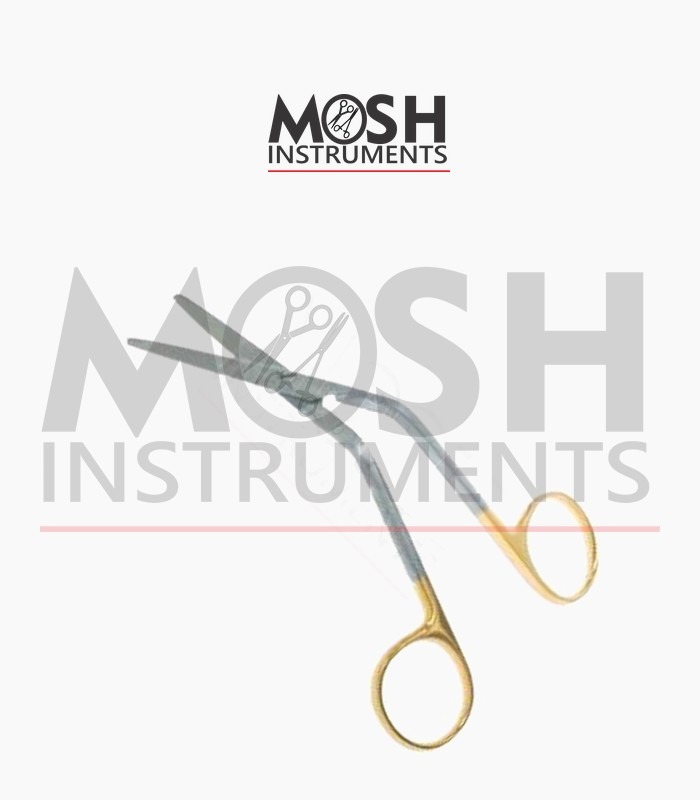
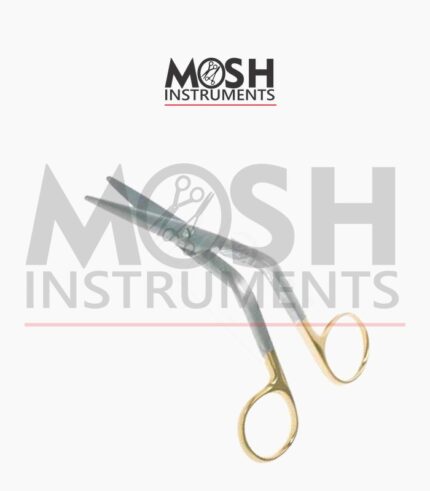
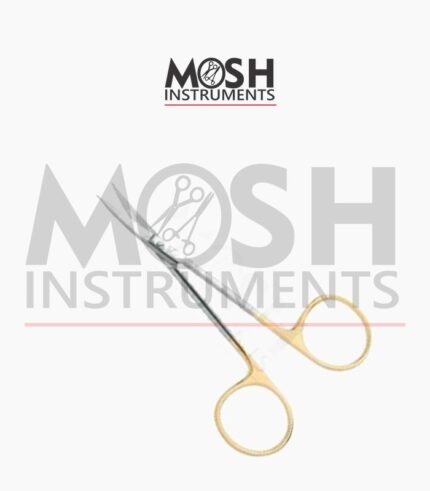
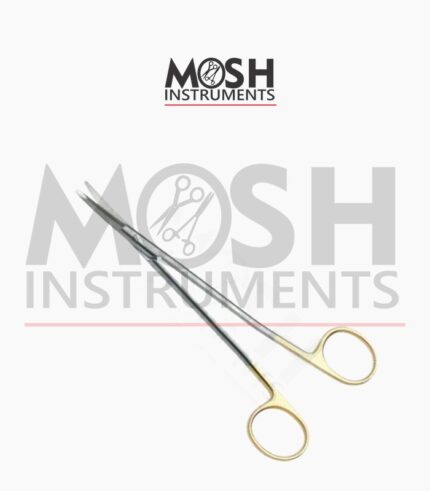
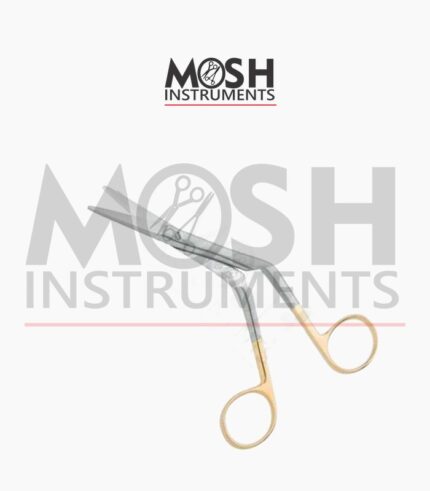
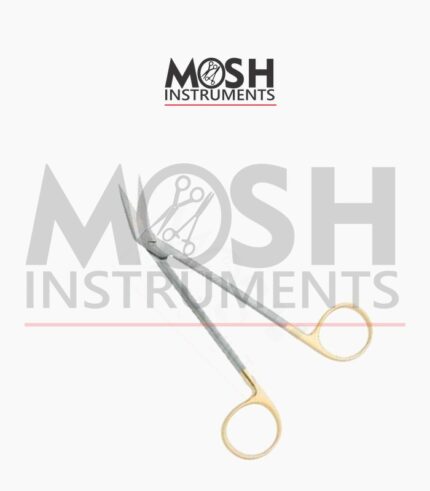
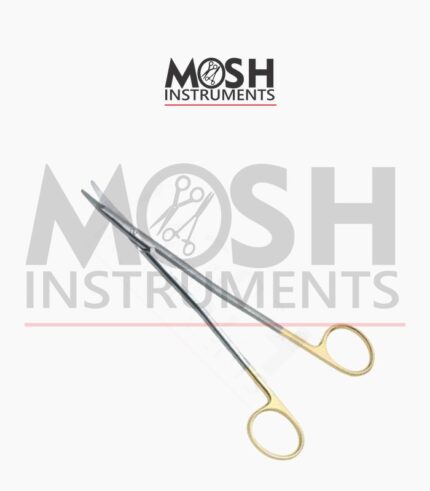
Our angled Fomon scissors trim nasal tissue with angled tungsten carbide blades.
They are 14.5cm long. Because the blades angle away, you keep a clear view of the dorsum while you trim. As a result, they suit rhinoplasty, septoplasty and ENT work.
Angled Fomon scissors Features
- Tungsten carbide edges: stay sharp much longer than plain steel.
- Angled blades: keep your hand out of view.
- 14.5cm length: gives fine control.
- Gold rings: mark it as a tungsten carbide instrument.
- Surgical stainless steel: resists corrosion through many autoclave cycles.
Clinical Applications
- Rhinoplasty
- Septoplasty
- Nasal tip surgery
- Dorsal hump reduction
- ENT surgery
Technical Specifications
| Length | 14.5cm |
| Blades | Angled |
| Edge | Tungsten carbide |
| Material | Surgical stainless steel |
| Sterilization | Autoclavable, reusable |
Cleaning and Sterilization
Clean the scissors soon after each use. First, open them and soak them in a pH-neutral enzymatic cleaner. Then brush the blades and joint with a soft nylon brush. After that, rinse and dry them fully. Finally, autoclave them in the open position. Also, protect the tips, because fine points dull if they knock other steel.
Quality, Warranty and OEM Supply
We make every instrument at our workshop in Sialkot, Pakistan. Before dispatch, our team checks each pair for cutting action, tip alignment and finish. We supply them non-sterile, so sterilize them before first use. In addition, a 3-month warranty covers material and manufacturing defects. We also offer OEM manufacturing, private labeling and wholesale supply. Browse our full range of plastic surgery scissors. You can also see our nasal septum instruments.
Angled Fomon scissors FAQs
Where are they used?
Surgeons use them to cut and trim nasal tissue during rhinoplasty and septoplasty.
What are angled Fomon scissors used for?
Surgeons use them to trim the dorsum and cartilage in rhinoplasty.
Are they reusable?
Yes. You can clean and autoclave them for repeated use.

Reviews
There are no reviews yet.